Aviation
Avionics Technician
Installs, tests, and repairs the safety-critical electronics that fly aircraft, under FAA accountability.
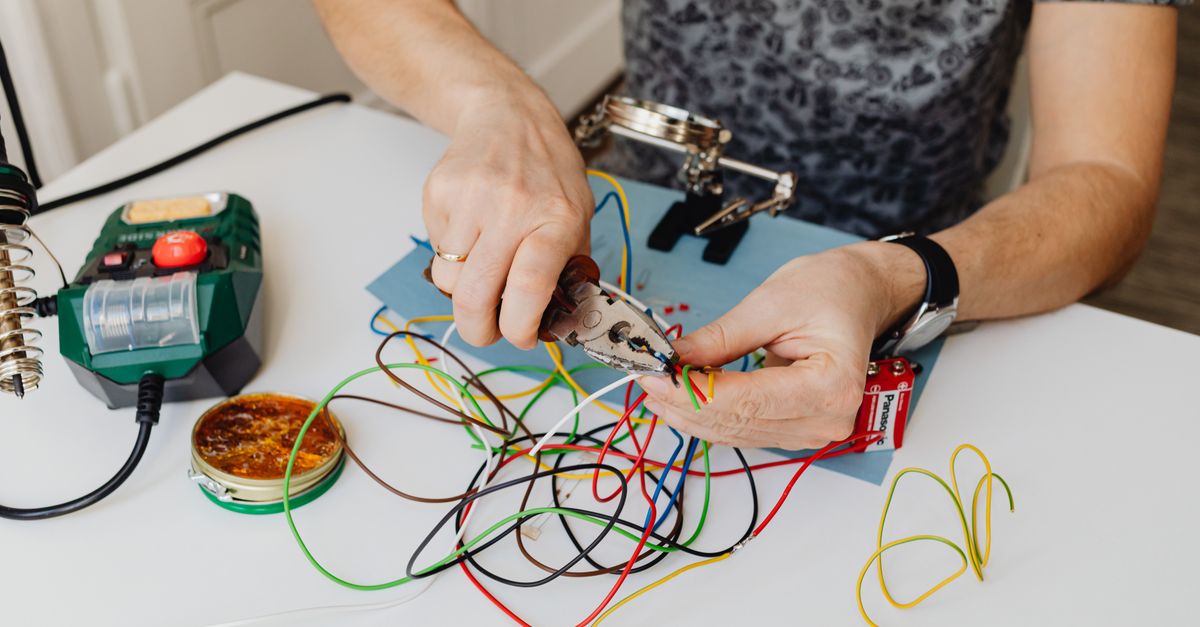
Why AI won't replace this
- Installation, calibration, and certified repair of flight electronics are physical, hands-on tasks performed in tight aircraft bays on airframes that vary by model, age, and modification.
- The FAA holds a certificated technician personally accountable for the airworthiness of every repair they sign off, so a licensed human must remain in the loop by law.
- Fault-finding on a real aircraft mixes electronics theory with manual dexterity and judgment that software cannot perform, since each wiring fault and each airframe is slightly different.
- Safety-critical, regulated, and high-consequence work resists automation because errors can be fatal and accountability cannot be delegated to a machine.
How the score is built
WRI 2026.1Both axes below are on the same 0 to 10 scale, and the score is simply 0.55 times the Capability Gap (what current AI cannot do in this work) plus 0.45 times the Deployment Friction (whether AI can actually be put into this role). Every career we list has cleared the AI-safe threshold, which is set at 9.0, so listed careers read 9.0 or higher and the most resistant approach 10.
Read it as a band, not a precise rank: differences smaller than about half a point are within the model's margin.
Capability Gap
What AI cannot do in this work
- Physical and embodied work8.5
- Real-time relational work7.9
- Improvisational judgment9.3
Deployment Friction
Whether AI can actually be put here
- Licensing10.0
- Accountability9.9
- Public trust9.7
- Capital and scale10.0
Why this deployment score
Hands-on installation, calibration, and certified repair of safety-critical aircraft electronics carries FAA accountability and demands physical dexterity on one-off airframes.
Data confidence
What is verified, and what is modeled
Official data
Pay and wage range
Official data
Outlook and education
Official data
Tasks and skill inputs
Pay, outlook, and task inputs come from BLS and O*NET. The AI-resistance score is the site's WRI model, benchmarked against 19 reference occupations with Spearman -0.65.
View source checklist
Pay and wage range
Official dataMedian pay and the 10th to 90th percentile range are generated from the BLS OEWS wage file for SOC 492091.
BLS OEWS 492091Outlook and education
Official dataThe 2024 to 2034 outlook, openings, and typical education path are checked against the BLS Occupational Outlook Handbook.
BLS Occupational Outlook HandbookTasks and skill inputs
Official dataThe WRI capability side uses O*NET descriptor data mapped to O*NET-SOC 49-2091.00.
O*NET 49-2091.00AI-resistance score
ModeledThe score is the site's WontReplace Index. It blends O*NET capability limits with deployment friction, then benchmarks the index against prior automation research.
WRI methodologyCareer narrative
Editorial reviewThe plain-English sections explain the official data and the site's thesis. They are not treated as source data.
Review noteAbout the career
Avionics technicians install, test, troubleshoot, and repair aircraft electronic systems. Their work includes navigation, communication, radar, flight instruments, autopilot, and flight-management equipment.
The role combines electronics knowledge with precise hands-on work inside real aircraft. Technicians read schematics, route wiring, calibrate systems, bench-test components, and document repairs that affect airworthiness.
How AI is changing this work
AI and built-in diagnostics help avionics technicians identify faults, follow troubleshooting trees, find parts, and use digital manuals. Aircraft health-monitoring systems can point technicians toward likely electronic failures. The tools speed diagnosis.
The human work is routing wires, crimping and soldering connections, calibrating instruments, and testing systems on a specific airframe. A certificated person remains responsible for airworthiness signoff. Software assists the repair, but does not own it.
Work settings & realities
- Airline maintenance bases and hangars, servicing the avionics on commercial fleets between flights and during scheduled checks.
- FAA-certificated repair stations and avionics shops, where units are bench-tested, repaired, and installed for many different aircraft.
- Aircraft and avionics manufacturers, supporting production, testing, and modification of new systems.
- Military and government aviation, maintaining electronics on a wide range of fixed-wing and rotary aircraft.
- General-aviation and corporate flight departments, installing and troubleshooting avionics on smaller and business aircraft.
- The realities: the work is hands-on and physical, often in cramped aircraft bays and at awkward angles, with overtime, night shifts, and weekend work common because aircraft are serviced when they are not flying.
Education & licensing
Most avionics technicians complete a postsecondary program at an FAA-approved Aviation Maintenance Technician School (often 18 to 24 months) or earn an associate degree in avionics or aviation electronics. Many also gain electronics training through the military. FAA certification is the key credential: technicians frequently hold an FCC Radiotelephone Operator license for work on radio equipment, and those who return aircraft to service work under an FAA Repairman certificate or an Airframe and Powerplant (A&P) mechanic certificate.
Specializations & advancement
- Communication and navigation systems, including radios, transponders, and GPS/navigation installations.
- Flight instruments and flight-management/autopilot systems on modern glass cockpits.
- Radar, surveillance, and weather systems on commercial and military aircraft.
- Aircraft electrical and wiring systems, including harness fabrication and fault tracing.
- Bench repair and calibration of removed avionics units at a repair station.
- Military avionics on specialized platforms, often requiring additional clearances and type training.
A day in the life
- Review work orders and aircraft logbooks, then pull the wiring diagrams and manuals for the systems being serviced.
- Install or remove avionics units, route and connect wiring, and perform functional and operational checks against specifications.
- Troubleshoot reported faults by testing components, isolating the cause, and repairing or replacing units, then re-testing to confirm the fix.
- Document all work, calibrations, and inspections accurately, and sign off only repairs that meet airworthiness standards.
The honest pros and cons
Pros
- Stable, faster-than-average demand driven by an aging workforce and a steady need to maintain existing fleets.
- Solid pay, a median near $82,000, without the cost or time of a four-year degree.
- Skilled, hands-on technical work that is hard to offshore or automate because it is safety-critical and FAA-regulated.
- Clear credential ladder, from program graduate to certificated technician to lead or inspector, with employer-funded training common.
- Highly resistant to automation because the certified, hands-on repair of flight electronics cannot be delegated to software.
Cons
- Physically demanding work in cramped bays, at heights, and at awkward angles, which can wear on the body over time.
- Irregular hours are common, including nights, weekends, and overtime, because aircraft are serviced when they are grounded.
- Certification and the personal accountability the FAA assigns make the work high-pressure and detail-intensive.
- Earning and keeping the right credentials (FCC license, FAA Repairman or A&P) takes time and ongoing effort.
- Overall employment growth is moderate rather than explosive, so openings come largely from replacing retiring workers.
How to get started
- 1Build a foundation in electronics through high school courses, a technical program, or military electronics training.
- 2Enroll in an FAA-approved avionics or aviation-maintenance program, or pursue an associate degree in avionics.
- 3Earn the relevant credentials, such as an FCC Radiotelephone Operator license and, for return-to-service work, an FAA Repairman or A&P certificate.
- 4Start at a repair station, airline, or manufacturer in a bench or installation role and log hands-on experience toward lead and inspector positions.
Alternatives and related fields
- Aircraft Mechanic
Maintains and repairs the airframe, engines, and mechanical systems; a closely related FAA-certificated trade.
- Electrician
Installs and repairs electrical systems and wiring; a related hands-on, licensed trade with strong demand.
- Aerospace Engineering and Operations Technician
Builds, tests, and operates aerospace systems and equipment, often working alongside engineers.
- Air Traffic Controller
Directs aircraft safely through controlled airspace; a high-stakes, safety-critical aviation career.
More careers AI won't replace
Frequently asked questions
Will AI replace avionics technicians?
No, AI is unlikely to replace avionics technicians soon. AI and built-in diagnostics help avionics technicians identify faults, follow troubleshooting trees, find parts, and use digital manuals. The human work is routing wires, crimping and soldering connections, calibrating instruments, and testing systems on a specific airframe.
How much do avionics technicians make?
Avionics technicians have a U.S. median pay of $82,280 per year, according to May 2025 BLS OEWS data. The BLS 10th to 90th percentile range is about $49,410 to $113,680 per year. Pay varies by location, setting, experience, credentials, and schedule.
How long does it take to become an avionics technician?
Usually about one to two years. Most people complete a postsecondary program at an FAA-approved school or an associate degree in avionics, then earn the relevant credentials such as an FCC Radiotelephone Operator license and, for return-to-service work, an FAA Repairman or A&P certificate.
Do you need a license to be an avionics technician?
Often, yes, depending on the work. Technicians working on radio and communication equipment typically hold an FCC General Radiotelephone Operator License, and anyone who returns an aircraft to service must work under FAA authority through an FAA Repairman certificate or an Airframe and Powerplant (A&P) mechanic certificate.
What is the difference between an avionics technician and an aircraft mechanic?
An avionics technician specializes in the aircraft's electronic systems, such as navigation, communication, radar, and flight instruments, while an aircraft mechanic focuses on the airframe, engines, and mechanical systems. The two work closely together, and some technicians hold credentials in both areas.
Is the job outlook for avionics technicians good?
BLS projects avionics technicians employment to grow 5 percent from 2024 to 2034. BLS also projects about 13,100 openings per year (aircraft and avionics mechanics and technicians group). The projection should be read with local licensing, location, and employer demand in mind.
What does an avionics technician do day to day?
They review work orders and manuals, install or remove avionics units, route and connect wiring, run functional and operational checks, troubleshoot reported faults, calibrate instruments, and document everything, signing off only repairs that meet airworthiness standards.