Allied Health
Orthotist and Prosthetist
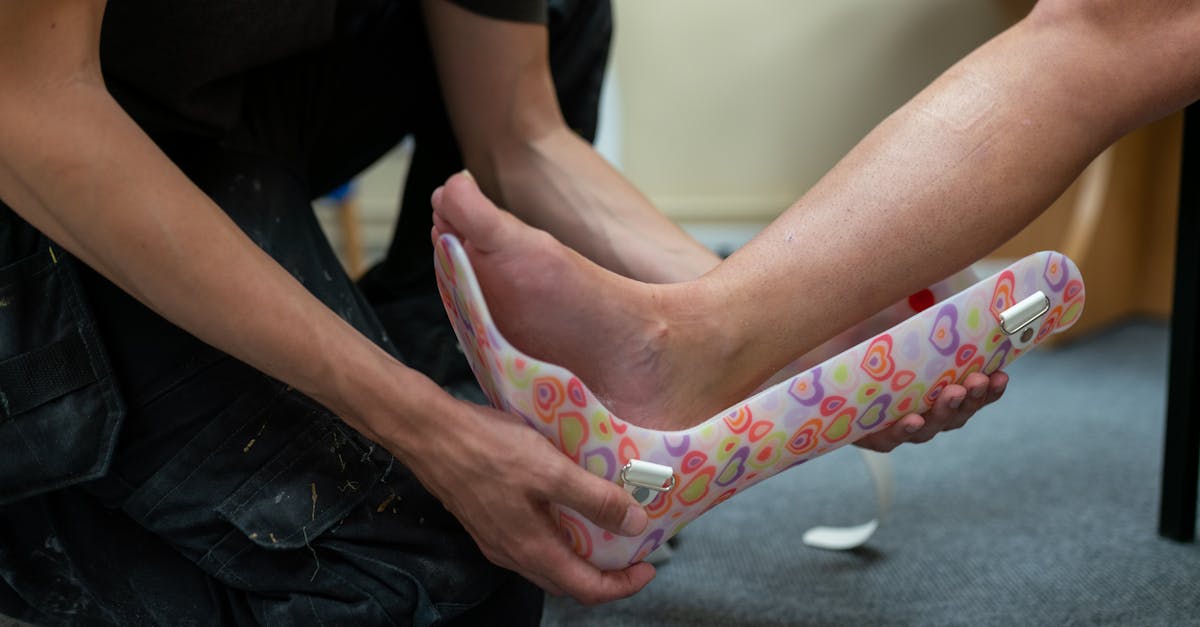
Custom-fits braces and artificial limbs to a living body, blending hands-on craftsmanship with clinical judgment.
Why AI won't replace this
- Fitting a brace or artificial limb to a specific living body is hands-on, physical work: measuring, casting, shaping, aligning, and reworking the fit by feel, none of which a screen can do.
- Every patient and every device is different, so the work resists the standardization that automation depends on; clinical judgment is applied case by case.
- Care unfolds over repeated in-person visits as the body changes, the patient reports comfort and function, and the practitioner adjusts, a relational loop that cannot be handed to software.
- Certification and state licensure require a credentialed human to deliver and remain accountable for the care, keeping a qualified practitioner in the loop by law.
How the score is built
WRI 2026.1Both axes below are on the same 0 to 10 scale, and the score is simply 0.55 times the Capability Gap (what current AI cannot do in this work) plus 0.45 times the Deployment Friction (whether AI can actually be put into this role). Every career we list has cleared the AI-safe threshold, which is set at 9.0, so listed careers read 9.0 or higher and the most resistant approach 10.
Read it as a band, not a precise rank: differences smaller than about half a point are within the model's margin.
Capability Gap
What AI cannot do in this work
- Physical and embodied work7.1
- Real-time relational work9.5
- Improvisational judgment9.4
Deployment Friction
Whether AI can actually be put here
- Licensing9.9
- Accountability9.9
- Public trust9.8
- Capital and scale9.9
Why this deployment score
Measuring, fitting, and adapting custom braces and artificial limbs to a living body is precise, hands-on craftsmanship plus clinical judgment and patient interaction that resists software automation.
Data confidence
What is verified, and what is modeled
Official data
Pay and wage range
Official data
Outlook and education
Official data
Tasks and skill inputs
Pay, outlook, and task inputs come from BLS and O*NET. The AI-resistance score is the site's WRI model, benchmarked against 19 reference occupations with Spearman -0.65.
View source checklist
Pay and wage range
Official dataMedian pay and the 10th to 90th percentile range are generated from the BLS OEWS wage file for SOC 29-2091.
BLS OEWS 29-2091Outlook and education
Official dataThe 2024 to 2034 outlook, openings, and typical education path are manually checked against the BLS Occupational Outlook Handbook.
BLS Occupational Outlook HandbookTasks and skill inputs
Official dataThe WRI capability side uses O*NET descriptor data mapped to O*NET-SOC 29-2091.00.
O*NET 29-2091.00AI-resistance score
ModeledThe score is the site's WontReplace Index. It blends O*NET capability limits with deployment friction, then benchmarks the index against prior automation research.
WRI methodologyCareer narrative
Editorial reviewThe plain-English sections explain the official data and the site's thesis. They are not treated as source data.
Review noteAbout the career
Orthotists make braces and supports for weak or injured limbs and spines. Prosthetists make artificial limbs for people with limb loss. Many O&P practitioners are certified to do both.
The work moves from measurement to design, fabrication, fitting, and follow-up adjustment. Practitioners use casts or 3D scans, choose materials, align the device, and refine the fit as the patient's body and movement change.
How AI is changing this work
AI helps with scanning, CAD/CAM design, gait analysis, documentation, scheduling, and insurance paperwork. Additive manufacturing can also speed up some sockets and orthoses. These tools make the workflow faster, but they do not replace the clinical fitting process.
The human part is judging a specific body, watching movement in real time, and adjusting comfort and alignment by hand. Patients also need coaching, follow-up, and skin-risk monitoring as their condition changes. Certification and state licensing keep a qualified practitioner accountable for the device.
Work settings & realities
- Patient-care O&P facilities and clinics, the largest setting, where practitioners cast, fabricate, fit, and adjust devices for a steady caseload.
- Hospitals and rehabilitation centers, working alongside physicians, surgeons, and physical therapists on patients recovering from injury, amputation, or surgery.
- Medical equipment and supplies manufacturers, where some practitioners focus on device design, fabrication, or product support.
- Outpatient and specialty clinics serving specific populations such as pediatrics, diabetes-related limb care, or sports and orthopedic injuries.
- The realities: it is physical work, you are on your feet, casting, lifting, and using fabrication equipment, and the fabrication side can involve dust, heat, and machinery. Caseloads and insurance documentation add administrative load.
- Most roles are on-site because the care is hands-on, though some consultation and follow-up scheduling can be handled remotely.
Education & licensing
A master's degree in orthotics and prosthetics from a program accredited by the Commission on Accreditation of Allied Health Education Programs (CAAHEP), followed by a one-year NCOPE-accredited residency per discipline and certification through the American Board for Certification in Orthotics, Prosthetics and Pedorthics (ABC). Many states also require a license.
Specializations & advancement
- Prosthetics: fitting and aligning artificial arms and legs, including advanced microprocessor-controlled and myoelectric limbs.
- Orthotics: braces and supports for the spine, limbs, and joints, from scoliosis bracing to post-surgical and stroke-recovery devices.
- Dual certification (CPO): practicing across both orthotics and prosthetics, the most common path for new graduates.
- Pediatric O&P: devices for growing children, including cranial helmets, scoliosis braces, and pediatric prostheses.
- Diabetic and lower-limb care: footwear, foot orthoses, and limb-loss prevention and management for at-risk patients.
- Leadership, education, and research: clinic management, residency mentoring, faculty roles, or device development with manufacturers.
A day in the life
- Evaluate a patient's needs and take measurements, casts, or 3D scans of the affected limb or body part.
- Design and fabricate or direct the fabrication of a custom orthosis or prosthesis from the right materials.
- Fit the device, watch the patient move or walk in it, and adjust the alignment and fit by hand.
- Document outcomes, coordinate with physicians and therapists, and teach the patient how to use and care for the device.
The honest pros and cons
Pros
- Strong, growing demand and good job security, with employment projected to grow much faster than average as the population ages.
- Solid pay, a median near $81,000, for a master's-level allied health career.
- Deeply meaningful work: you directly restore mobility and independence to people with limb loss, injuries, or disabilities.
- A satisfying mix of clinical care and hands-on craftsmanship, with tangible results you can see patients use.
- Highly resistant to automation because the hands-on fitting, individual judgment, and ongoing patient relationship cannot be done by software.
Cons
- A master's degree plus a residency are required, a long and competitive path with relatively few accredited programs.
- Physically demanding: you are on your feet, casting, lifting, and working with fabrication equipment, which can wear on your body.
- Insurance reimbursement and documentation can be burdensome and sometimes limit what devices patients can receive.
- Smaller field with fewer schools and residency slots, so getting in and finding the right residency can be competitive.
- Emotionally demanding at times, since you work with people adjusting to limb loss and serious injury.
How to get started
- 1Earn a bachelor's degree and complete prerequisite science coursework such as anatomy, physiology, physics, and chemistry.
- 2Apply to and complete a CAAHEP-accredited master's program in orthotics and prosthetics (about 18 to 30 months).
- 3Complete a 12-month NCOPE-accredited residency per discipline (or an 18-month dual residency) under a certified practitioner.
- 4Pass the ABC certification exams to earn the CPO credential, then obtain a state license where required.
Alternatives and related fields
- Physical Therapist
A rehab career focused on restoring movement, strength, and function; works closely with O&P practitioners and requires a doctoral degree (DPT).
- Occupational Therapist
Helps patients regain the ability to perform everyday tasks; a related rehab path entered with a master's or doctorate.
- Surgical Technologist
Assists in the operating room during surgery; a hands-on allied health role entered with a shorter postsecondary program.
- Orthotic and Prosthetic Technician
Fabricates the devices that orthotists and prosthetists design and fit, entered with on-the-job or certificate training and less debt.
More careers AI won't replace
Frequently asked questions
Will AI replace orthotists and prosthetists?
No, AI is unlikely to replace orthotists and prosthetists soon. AI helps with scanning, CAD/CAM design, gait analysis, documentation, scheduling, and insurance paperwork. The human part is judging a specific body, watching movement in real time, and adjusting comfort and alignment by hand.
How much do orthotists and prosthetists make?
Orthotists and prosthetists have a U.S. median pay of $81,110 per year, according to May 2025 BLS OEWS data. The BLS 10th to 90th percentile range is about $46,350 to $119,810 per year. Pay varies by location, setting, experience, credentials, and schedule.
How long does it take to become an orthotist and prosthetist?
It usually takes about 6 to 7 years after high school. Most candidates complete a bachelor's degree, a CAAHEP-accredited master's degree in orthotics and prosthetics, and an NCOPE-accredited residency. NCOPE lists a 12-month minimum for a single discipline residency and 18 months for a dual-discipline residency.
What degree and certification do you need to be an orthotist and prosthetist?
You need a master's degree in orthotics and prosthetics from a CAAHEP-accredited program, followed by an NCOPE-accredited residency. Certification is handled by the American Board for Certification in Orthotics, Prosthetics and Pedorthics. Many states also require a state license before independent practice.
What is the difference between an orthotist and a prosthetist?
An orthotist designs and fits orthoses, such as braces and supports for limbs, joints, or the spine. A prosthetist designs and fits prostheses, such as artificial limbs for people with limb loss. Many practitioners earn dual certification and work in both areas.
Is the job outlook for orthotists and prosthetists good?
BLS projects orthotists and prosthetists employment to grow 13 percent from 2024 to 2034. BLS also projects about 900 openings per year. The projection should be read with local licensing, location, and employer demand in mind.
What do orthotists and prosthetists do day to day?
Orthotists and prosthetists evaluate patients, take measurements or casts, and design custom braces or prosthetic limbs. They fit, test, and adjust devices for comfort and function. They also document care, coordinate with physicians and therapists, and teach patients how to use and care for the device.