Allied Health
Respiratory Therapist
Licensed clinicians who manage breathing and ventilators at the bedside, where AI cannot stand in.
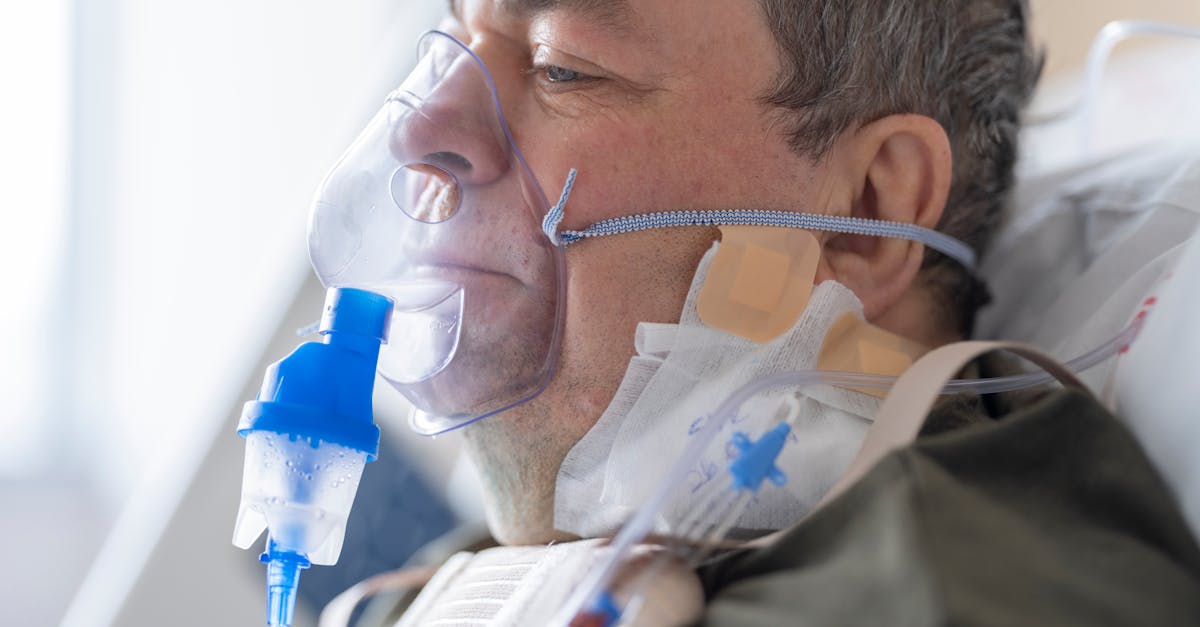
Why AI won't replace this
- Critical-care airway and ventilator management is physical and high-stakes; a licensed therapist has to be at the bedside, hands on the equipment and the patient, to adjust settings and respond in seconds.
- Emergencies such as cardiac arrests, traumas, and failed airways demand a trained responder physically present and accountable, something software cannot provide.
- State licensure and hospital rules require a credentialed respiratory therapist to deliver and stand behind the care, keeping a qualified human legally in the loop.
- Reading a struggling patient, calming them, and coordinating with the bedside team in real time is embodied, relational work that does not reduce to an algorithm.
How the score is built
WRI 2026.1Both axes below are on the same 0 to 10 scale, and the score is simply 0.55 times the Capability Gap (what current AI cannot do in this work) plus 0.45 times the Deployment Friction (whether AI can actually be put into this role). Every career we list has cleared the AI-safe threshold, which is set at 9.0, so listed careers read 9.0 or higher and the most resistant approach 10.
Read it as a band, not a precise rank: differences smaller than about half a point are within the model's margin.
Capability Gap
What AI cannot do in this work
- Physical and embodied work9.0
- Real-time relational work9.5
- Improvisational judgment9.3
Deployment Friction
Whether AI can actually be put here
- Licensing10.0
- Accountability10.0
- Public trust10.0
- Capital and scale10.0
Why this deployment score
Bedside ventilator and airway management in critical care is physical, high-stakes, and requires a licensed responder physically present at the patient.
Data confidence
What is verified, and what is modeled
Official data
Pay and wage range
Official data
Outlook and education
Official data
Tasks and skill inputs
Pay, outlook, and task inputs come from BLS and O*NET. The AI-resistance score is the site's WRI model, benchmarked against 19 reference occupations with Spearman -0.65.
View source checklist
Pay and wage range
Official dataMedian pay and the 10th to 90th percentile range are generated from the BLS OEWS wage file for SOC 291126.
BLS OEWS 291126Outlook and education
Official dataThe 2024 to 2034 outlook, openings, and typical education path are checked against the BLS Occupational Outlook Handbook.
BLS Occupational Outlook HandbookTasks and skill inputs
Official dataThe WRI capability side uses O*NET descriptor data mapped to O*NET-SOC 29-1126.00.
O*NET 29-1126.00AI-resistance score
ModeledThe score is the site's WontReplace Index. It blends O*NET capability limits with deployment friction, then benchmarks the index against prior automation research.
WRI methodologyCareer narrative
Editorial reviewThe plain-English sections explain the official data and the site's thesis. They are not treated as source data.
Review noteAbout the career
Respiratory therapists evaluate and treat people with breathing problems such as asthma, COPD, pneumonia, and respiratory failure. They run tests, deliver oxygen and aerosol treatments, and manage ventilators in hospitals and other care settings.
The work is hands-on and urgent when patients cannot breathe on their own. RTs respond to codes, troubleshoot ventilators, support airways, and explain treatment to patients and families.
How AI is changing this work
AI helps respiratory therapists with ventilator suggestions, monitoring alerts, pulmonary-function interpretation, sleep-study support, and documentation. These tools can reduce routine charting and surface problems faster. They still require clinical review.
The human work is managing airways, suctioning, repositioning patients, troubleshooting ventilators, and responding to codes. Patients also need calm bedside communication during frightening breathing problems. State licensure keeps a qualified therapist accountable for care.
Work settings & realities
- Hospitals, by far the largest employer, where therapists rotate through emergency departments, intensive care units, neonatal and pediatric units, and general medical floors.
- Skilled nursing and long-term acute care facilities, managing patients on ventilators, tracheostomies, and oxygen who need ongoing respiratory support.
- Home health, setting up and teaching patients to use oxygen, CPAP, and home ventilators, and following up on chronic lung disease.
- Sleep disorder centers and pulmonary function labs, running and helping interpret diagnostic studies.
- The realities: most hospital roles are shift work, including nights, weekends, and holidays, often in 12-hour blocks, and the work is physical and exposed to infectious illness, as the COVID-19 pandemic made clear.
- Nearly all direct-care roles are on-site because the treatment is hands-on, though some sleep-study scoring and telehealth follow-up can be done remotely.
Education & licensing
An associate degree from a respiratory therapy program accredited by the Commission on Accreditation for Respiratory Care (CoARC) is the minimum to enter the field, though bachelor's degrees are increasingly common. Graduates must pass the National Board for Respiratory Care (NBRC) exams to earn the CRT or RRT credential, and nearly every state requires a license to practice.
Specializations & advancement
- Neonatal and pediatric respiratory care, including the NBRC Neonatal/Pediatric Specialist (NPS) credential for work in NICUs and PICUs.
- Adult critical care and ventilator management in the ICU, the highest-acuity hospital setting.
- Pulmonary function and diagnostics, including the Certified Pulmonary Function Technologist (CPFT) and Registered Pulmonary Function Technologist (RPFT) credentials.
- Sleep medicine, with the Sleep Disorders Specialist (SDS) credential and work in sleep labs.
- Adult Critical Care Specialist (ACCS) credential for therapists focused on the sickest adult patients.
- Leadership, education, and management roles such as lead therapist, department supervisor, clinical educator, or program faculty, often pursued with a bachelor's or master's degree.
A day in the life
- Round on assigned patients, assess breathing and oxygen levels, and adjust ventilator settings, oxygen, and treatments as their condition changes.
- Perform diagnostic tests such as arterial blood gases and bedside pulmonary function checks, then report findings to physicians and nurses.
- Respond to rapid-response calls, code blues, and difficult airways, securing and supporting the patient's breathing during emergencies.
- Educate patients and families on inhalers, oxygen use, and home equipment, and document assessments, treatments, and changes in the chart.
The honest pros and cons
Pros
- Strong, growing demand and good job security, with employment projected to grow much faster than average.
- Solid pay for the training required, a median around $82,280 off a two-year associate degree, one of the better returns in allied health.
- A relatively fast and affordable path into a licensed healthcare career compared with most clinical roles.
- Meaningful, high-impact work, since you are often the person keeping a critically ill patient breathing.
- Highly resistant to automation because the hands-on, licensed, in-the-room care cannot be done by software.
Cons
- Shift work is the norm, including nights, weekends, and holidays, often in 12-hour shifts, which is hard on work-life balance.
- Physically demanding and emotionally heavy: you are on your feet, lifting and repositioning patients, and you witness deaths and codes.
- Exposure to infectious respiratory illness is part of the job, as the COVID-19 pandemic made starkly clear.
- Pay growth can plateau, and advancement beyond bedside roles often requires a bachelor's or master's degree.
- High-acuity settings like the ICU carry real stress and risk of burnout.
How to get started
- 1Complete a respiratory therapy associate degree from a CoARC-accredited program; choose an advanced-level program if you want the smoothest route to the RRT.
- 2Pass the NBRC exams to earn the CRT and then the RRT credential, which most employers and several states now expect.
- 3Obtain a license in your state, since nearly all states require one to practice.
- 4Apply to hospital respiratory departments, where new graduates train into floor, ER, and eventually ICU and specialty roles.
Alternatives and related fields
- Registered Nurse
Works alongside respiratory therapists at the bedside, providing broader patient care; entered with an associate or bachelor's degree.
- Surgical Technologist
Another hands-on allied-health role with a short training path, assisting in the operating room.
- Diagnostic Medical Sonographer
A skilled imaging role entered with an associate or bachelor's degree, also resistant to automation because the scanning is hands-on.
- Physician Assistant
A higher-paying, master's-level clinical path for those who want to diagnose and treat across specialties.
More careers AI won't replace
Frequently asked questions
Will AI replace respiratory therapists?
No, AI is unlikely to replace respiratory therapists soon. AI helps respiratory therapists with ventilator suggestions, monitoring alerts, pulmonary-function interpretation, sleep-study support, and documentation. The human work is managing airways, suctioning, repositioning patients, troubleshooting ventilators, and responding to codes.
How much do respiratory therapists make?
Respiratory therapists have a U.S. median pay of $82,280 per year, according to May 2025 BLS OEWS data. The BLS 10th to 90th percentile range is about $63,660 to $118,050 per year. Pay varies by location, setting, experience, credentials, and schedule.
How long does it take to become a respiratory therapist?
About two to four years. The minimum is an associate degree from a CoARC-accredited respiratory therapy program (roughly two years), after which you pass the NBRC exams for the CRT and RRT credentials and obtain a state license. Many therapists later add a bachelor's degree for advancement.
What degree and license do respiratory therapists need?
At minimum an associate degree from a program accredited by the Commission on Accreditation for Respiratory Care (CoARC), plus the NBRC credential (CRT and, increasingly, the RRT). Nearly every state, 49 of 50, requires a license to practice, and some states such as Ohio, California, and New York require the RRT specifically.
Is respiratory therapy a good career?
For many people, yes. It offers a fast, affordable path into a licensed healthcare job, strong demand projected to grow much faster than average, and solid pay around $82,280 off a two-year degree. The trade-offs are shift work, physically and emotionally demanding conditions, and exposure to infectious illness.
What is the difference between a respiratory therapist and a registered nurse?
A registered nurse provides broad patient care across many systems, while a respiratory therapist specializes in breathing and cardiopulmonary care, managing oxygen, ventilators, airways, and pulmonary diagnostics. The two work closely together at the bedside, and a respiratory therapist can enter the field with a two-year associate degree.
Is the job outlook for respiratory therapists good?
BLS projects respiratory therapists employment to grow 12 percent from 2024 to 2034. BLS also projects about 8,800 openings per year. The projection should be read with local licensing, location, and employer demand in mind.