Allied Health
MRI Technologist
Run the scanner, screen for hidden metal, and keep patients safe inside a powerful magnet.
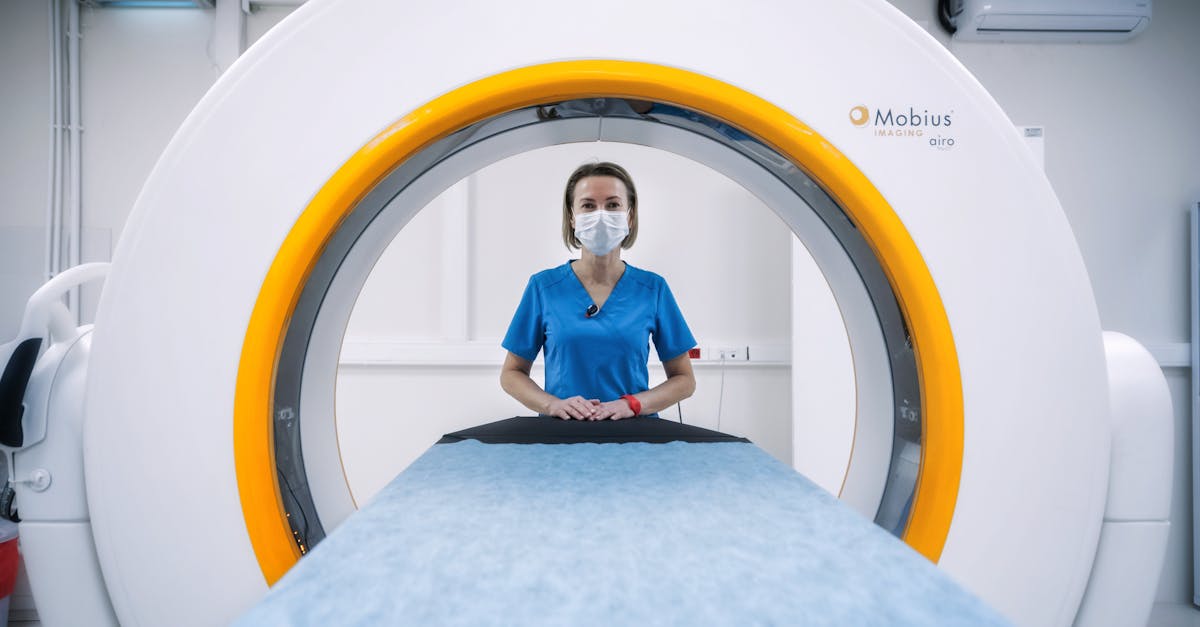
Why AI won't replace this
- The job is embodied and safety-critical. A technologist physically screens each patient for ferrous metal and implants, clears the magnet room of hazards, and reacts in real time in an environment where a missed metal object can injure or kill. No software can take over that physical, in-the-room responsibility.
- Positioning is hands-on and patient-specific. Placing a real, unique body and the imaging coils correctly in the bore, accounting for pain, size, and inability to hold still, is manual judgment work done at the bedside, not a task an algorithm performs.
- Patient care is central. Many patients are claustrophobic, in pain, or frightened, and the tech coaches, reassures, and adjusts the exam on the fly so it can be completed safely and produce usable images.
- Certification and accountability require a credentialed human. ARRT or ARMRIT certification, and licensure where states require it, keep a qualified person responsible for the scan, the patient, and the safety of everyone in the magnet room.
How the score is built
WRI 2026.1Both axes below are on the same 0 to 10 scale, and the score is simply 0.55 times the Capability Gap (what current AI cannot do in this work) plus 0.45 times the Deployment Friction (whether AI can actually be put into this role). Every career we list has cleared the AI-safe threshold, which is set at 9.0, so listed careers read 9.0 or higher and the most resistant approach 10.
Read it as a band, not a precise rank: differences smaller than about half a point are within the model's margin.
Capability Gap
What AI cannot do in this work
- Physical and embodied work6.3
- Real-time relational work9.3
- Improvisational judgment9.2
Deployment Friction
Whether AI can actually be put here
- Licensing9.9
- Accountability9.8
- Public trust10.0
- Capital and scale10.0
Why this deployment score
MRI techs physically screen patients for ferrous hazards, position them in the bore, and manage real-time safety in a high-consequence magnetic environment, embodied and safety-critical work no software can take over.
Data confidence
What is verified, and what is modeled
Official data
Pay and wage range
Official data
Outlook and education
Official data
Tasks and skill inputs
Pay, outlook, and task inputs come from BLS and O*NET. The AI-resistance score is the site's WRI model, benchmarked against 19 reference occupations with Spearman -0.65.
View source checklist
Pay and wage range
Official dataMedian pay and the 10th to 90th percentile range are generated from the BLS OEWS wage file for SOC 292035.
BLS OEWS 292035Outlook and education
Official dataThe 2024 to 2034 outlook, openings, and typical education path are checked against the BLS Occupational Outlook Handbook.
BLS Occupational Outlook HandbookTasks and skill inputs
Official dataThe WRI capability side uses O*NET descriptor data mapped to O*NET-SOC 29-2035.00.
O*NET 29-2035.00AI-resistance score
ModeledThe score is the site's WontReplace Index. It blends O*NET capability limits with deployment friction, then benchmarks the index against prior automation research.
WRI methodologyCareer narrative
Editorial reviewThe plain-English sections explain the official data and the site's thesis. They are not treated as source data.
Review noteAbout the career
MRI technologists operate magnetic resonance imaging scanners to produce diagnostic images. They screen patients for metal risks, position the body and coils, select scan sequences, and monitor the patient during the exam.
MRI safety is central because the magnet is always on and can pull in unsafe metal objects. Technologists keep the room safe, reassure anxious patients, and capture images physicians use to diagnose disease and injury.
How AI is changing this work
AI helps MRI teams shorten scans, reduce noise, correct some motion artifacts, automate measurements, and flag findings for radiologists. These tools can improve image acquisition and workflow. They do not run the room safely by themselves.
The human work is screening for hidden metal, clearing the magnet room, positioning the patient and coils, reassuring claustrophobic patients, and reacting if something goes wrong. MRI safety requires trained judgment at the scanner.
Work settings & realities
- Hospitals, the largest employer, where MRI runs across day, evening, and overnight shifts and covers inpatients, emergency cases, and a wide mix of exams.
- Freestanding diagnostic imaging centers, often with a more predictable outpatient daytime schedule.
- Physicians' offices and specialty clinics, including orthopedic and neurology practices that image their own patients.
- Outpatient care centers and mobile MRI units that bring scanning to smaller communities and rural hospitals.
- The realities: you are on your feet, lifting and positioning patients, working around an always-on high-field magnet that demands constant safety discipline, and contrast studies and time-sensitive scans add pressure.
- Most roles are on-site by necessity; hospital MRI commonly includes evening, weekend, and on-call coverage.
Education & licensing
Most MRI technologists begin with an associate's degree in radiologic technology from a program accredited by the Joint Review Committee on Education in Radiologic Technology (JRCERT), then add MRI-specific clinical training. The standard credential is the ARRT certification in MRI, earned by passing the American Registry of Radiologic Technologists exam; some techs cross-train from another modality, and ARMRIT offers a recognized MRI-only path. A few states license radiologic and MRI personnel, so requirements vary by state.
Specializations & advancement
- High-field clinical MRI (1.5T and 3T) covering brain, spine, and musculoskeletal imaging, the bread-and-butter of the field.
- Neuroimaging, including advanced sequences for stroke, tumors, and the brain and spinal cord.
- Cardiac MRI, a growing subspecialty imaging the heart's structure and function.
- Breast MRI, often part of a women's imaging and cancer-screening program.
- Cross-modality work (CT, X-ray, and MRI), valued by hospitals that want flexible techs.
- Lead technologist, MRI safety officer, applications specialist, or education roles for experienced techs.
A day in the life
- Review the schedule and the day's exam orders, then screen each patient with a detailed questionnaire and conversation to rule out metal, implants, and other contraindications before they go near the magnet.
- Position the patient and the imaging coils in the bore, explain what to expect, coach claustrophobic or in-pain patients, and start and adjust scan sequences from the console while monitoring the patient throughout.
- Manage contrast studies when ordered, place and operate the power injector, watch for reactions, and keep the magnet room clear of any ferrous hazard for the entire shift.
- Check image quality, repeat sequences if motion or artifact ruined a series, send completed studies to PACS for the radiologist, and document the exam in the patient record.
The honest pros and cons
Pros
- Steady, faster-than-average demand and good job security, driven by an aging population that needs more imaging.
- Solid pay, a median of $95,480, for a career you can enter with a two-year degree.
- A fast, affordable path into healthcare compared with the four-plus years many clinical roles require.
- Direct patient contact and a clear sense of purpose, since your images help diagnose serious conditions.
- Highly resistant to automation, because the hands-on safety screening, positioning, and real-time judgment cannot be done by software.
Cons
- Physically demanding, with time on your feet plus lifting and positioning patients, which can wear on your body over a career.
- Hospital roles often include evening, weekend, and on-call shifts.
- The constant safety responsibility around a powerful magnet is high-stakes, and a lapse can seriously injure someone.
- You must pass certification exams and keep up continuing education to stay employable.
- Emotionally hard moments, such as scanning frightened or seriously ill patients or seeing a difficult finding on the images.
How to get started
- 1Finish an accredited associate's degree in radiologic technology (JRCERT-accredited) and pass the ARRT exam to become a registered radiologic technologist, or enter through a recognized MRI-specific program.
- 2Complete the required MRI clinical hours and pass the ARRT MRI certification exam (or the ARMRIT exam) to credential specifically in magnetic resonance imaging.
- 3Apply for hospital or imaging-center MRI positions, where employers expect certification and value any cross-training from CT or X-ray.
- 4Keep certification current with continuing education and stay sharp on MRI safety standards, which are the heart of the role.
Alternatives and related fields
- Diagnostic Medical Sonographer
A related imaging path that uses ultrasound instead of MRI; also entered with a two-year associate's degree.
- Radiation Therapist
Delivers targeted radiation to treat cancer patients; a related hands-on, imaging-adjacent allied health role.
- Surgical Technologist
Assists in the operating room during surgery; another hands-on allied health career entered with an associate's degree.
- Respiratory Therapist
Treats patients with breathing problems; an allied health role entered with an associate's degree.
More careers AI won't replace
Frequently asked questions
Will AI replace MRI technologists?
No, AI is unlikely to replace MRI technologists soon. AI helps MRI teams shorten scans, reduce noise, correct some motion artifacts, automate measurements, and flag findings for radiologists. The human work is screening for hidden metal, clearing the magnet room, positioning the patient and coils, reassuring claustrophobic patients, and reacting if something goes wrong.
How much do MRI technologists make?
MRI technologists have a U.S. median pay of $95,480 per year, according to May 2025 BLS OEWS data. The BLS 10th to 90th percentile range is about $68,890 to $127,670 per year. Pay varies by location, setting, experience, credentials, and schedule.
How long does it take to become an MRI technologist?
Usually about two to three years. Most people complete a two-year accredited associate's degree in radiologic technology, pass the ARRT exam, then add MRI-specific clinical hours and pass the MRI certification exam. Entering through a dedicated MRI program is also possible.
Do you need a license or certification to be an MRI technologist?
Nearly all employers require national certification, so in practice you need it. The common path is ARRT certification in MRI; ARMRIT offers a recognized MRI-only credential. A handful of states also license radiologic and MRI personnel, so check your state's rules.
What is the difference between an MRI technologist and a radiologic technologist?
A radiologic technologist is the broader role and typically works with X-ray and CT, while an MRI technologist specializes in magnetic resonance imaging. Most MRI techs start as radiologic technologists and then add MRI training and certification, and many keep working across more than one modality.
Is being an MRI technologist dangerous?
The magnet is always on and strong enough to turn loose ferrous objects into projectiles, so MRI is a high-stakes environment, but it is safe when run by a trained tech. Most of the job is enforcing strict safety screening and keeping metal out of the room, which is exactly why a credentialed human has to be there.
Is the job outlook for MRI technologists good?
BLS projects MRI technologists employment to grow 7 percent from 2024 to 2034. BLS also projects about 2,600 openings per year. The projection should be read with local licensing, location, and employer demand in mind.