Maritime
Ship Captain and Mate
Federal law requires a Coast Guard-licensed human at the helm, and software cannot hold that license or the liability that comes with it.
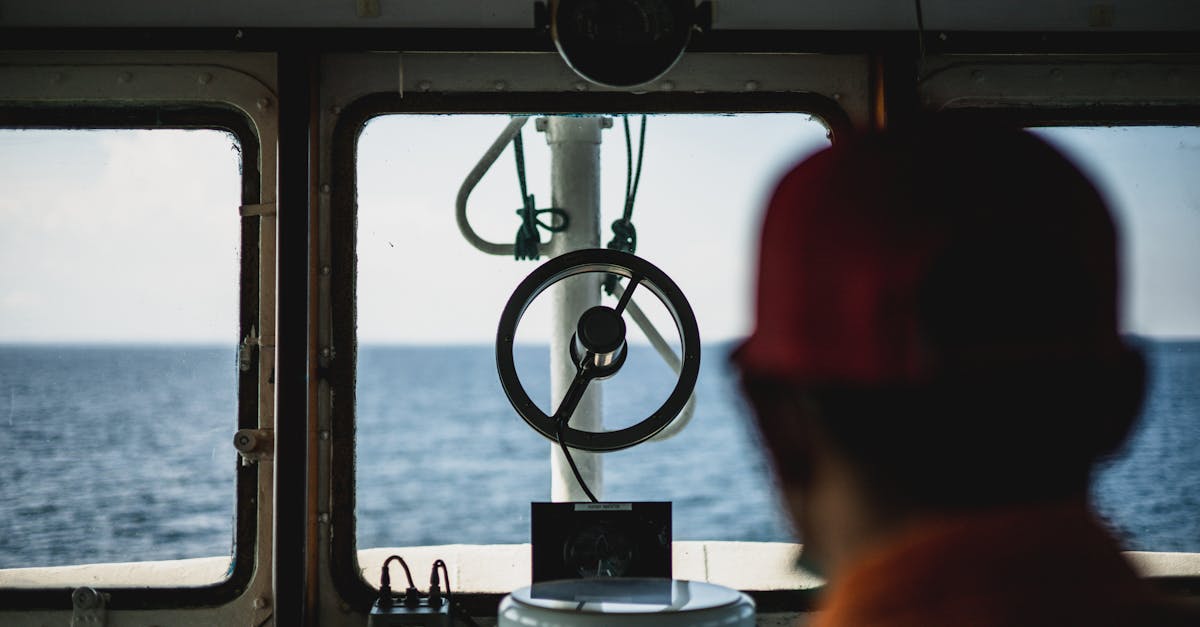
Why AI won't replace this
- Federal law requires a Coast Guard-credentialed master in charge of the vessel; the license is held by a qualified person, not by software, and an automated system cannot satisfy that legal requirement on its own.
- Harbor, river, and channel piloting demands embodied judgment in narrow, shifting, hazardous waters, reading current, wind, traffic, and tides in real time, where margins are measured in feet and conditions change minute to minute.
- The captain bears personal liability for the vessel, crew, cargo, passengers, and the environment, so a human must own the final decision and answer for it after an incident.
- Crews, agencies, and emergencies require on-the-spot leadership: directing a deck team, coordinating with the Coast Guard and pilots, and managing a fire, grounding, or man-overboard with no time to wait on remote support.
How the score is built
WRI 2026.1Both axes below are on the same 0 to 10 scale, and the score is simply 0.55 times the Capability Gap (what current AI cannot do in this work) plus 0.45 times the Deployment Friction (whether AI can actually be put into this role). Every career we list has cleared the AI-safe threshold, which is set at 9.0, so listed careers read 9.0 or higher and the most resistant approach 10.
Read it as a band, not a precise rank: differences smaller than about half a point are within the model's margin.
Capability Gap
What AI cannot do in this work
- Physical and embodied work9.2
- Real-time relational work9.1
- Improvisational judgment9.3
Deployment Friction
Whether AI can actually be put here
- Licensing10.0
- Accountability10.0
- Public trust9.9
- Capital and scale9.9
Why this deployment score
U.S. Coast Guard licensing legally mandates a credentialed master, harbor and river piloting require embodied judgment in narrow hazardous waters, and the captain bears personal liability for vessel and crew.
Data confidence
What is verified, and what is modeled
Official data
Pay and wage range
Official data
Outlook and education
Official data
Tasks and skill inputs
Pay, outlook, and task inputs come from BLS and O*NET. The AI-resistance score is the site's WRI model, benchmarked against 19 reference occupations with Spearman -0.65.
View source checklist
Pay and wage range
Official dataMedian pay and the 10th to 90th percentile range are generated from the BLS OEWS wage file for SOC 535021.
BLS OEWS 535021Outlook and education
Official dataThe 2024 to 2034 outlook, openings, and typical education path are checked against the BLS Occupational Outlook Handbook.
BLS Occupational Outlook HandbookTasks and skill inputs
Official dataThe WRI capability side uses O*NET descriptor data mapped to O*NET-SOC 53-5021.00.
O*NET 53-5021.00AI-resistance score
ModeledThe score is the site's WontReplace Index. It blends O*NET capability limits with deployment friction, then benchmarks the index against prior automation research.
WRI methodologyCareer narrative
Editorial reviewThe plain-English sections explain the official data and the site's thesis. They are not treated as source data.
Review noteAbout the career
Ship captains and mates operate commercial vessels and keep voyages safe. Captains command the vessel, plan the trip, supervise the crew, manage cargo or passengers, and answer to the Coast Guard and vessel owner.
Mates stand watches, navigate, run deck operations, and take charge when the captain is off duty. The work spans cargo ships, tugs, ferries, fishing boats, and offshore vessels.
How AI is changing this work
AI and automation help ship crews with electronic charting, radar tracking, AIS, autopilot, weather routing, and voyage planning. Some operators are testing more autonomous vessels. These tools handle routine navigation support.
The human work is commanding the vessel, docking in wind or current, judging close-quarters traffic, and leading the crew through emergencies. Federal law requires a credentialed master who carries responsibility for the vessel, people, cargo, and environment.
Work settings & realities
- Oceangoing cargo ships, tankers, and container vessels on coastal and international routes, with long hitches away from home.
- Harbor tugs and inland towboats pushing barges on rivers and the Intracoastal Waterway, often on rotations such as weeks on, weeks off.
- Passenger ferries, dinner and sightseeing cruises, and excursion boats, which keep crews closer to home but on demanding daily schedules.
- Commercial fishing vessels and offshore supply, crew, and research vessels serving the energy and science sectors.
- The realities: rotating watches around the clock, weather and tides that do not wait, weeks or months at sea away from family, and full responsibility for the vessel and everyone on it, which can be physically and mentally demanding.
- The work is on-site aboard the vessel; the captain and mates have to be physically present at the controls and cannot command from shore.
Education & licensing
There is no single degree requirement. The legal credential is a U.S. Coast Guard Merchant Mariner Credential (MMC) with the appropriate officer endorsement, earned through documented sea time, Coast Guard-approved courses, and exams. Many enter through the hawsepipe, working up from deckhand, while others attend a state or federal maritime academy and graduate with a bachelor's degree and an officer license.
Specializations & advancement
- Deep-sea master or mate on oceangoing cargo ships, tankers, and container vessels, often with unlimited-tonnage endorsements.
- Inland and river towboat captain pushing barges on the Mississippi River system and the Intracoastal Waterway.
- Harbor tug captain and docking pilot handling ship-assist and escort work in ports.
- Passenger vessel master on ferries, dinner cruises, and excursion boats.
- Offshore supply, crew, and dynamic-positioning vessel master serving energy platforms and wind farms.
- Commercial fishing vessel captain, and state or federal harbor and river pilot, a separately licensed specialty that boards and guides ships through local waters.
A day in the life
- Plan and review the voyage: check charts, weather, tides, traffic, and the passage plan, then brief the crew on the watch schedule and the day's operations.
- Navigate and handle the vessel, monitoring position, speed, and heading on radar and ECDIS, adjusting for current and traffic, and taking the helm for docking, locks, or tight channels.
- Oversee the crew and the vessel: supervise deck work, loading and unloading, maintenance, and safety drills, and coordinate with pilots, port agents, and the Coast Guard.
- Keep official records and stand the watch, logging movements and incidents, responding to any mechanical, weather, or safety problem, and handing off to the relieving officer.
The honest pros and cons
Pros
- Strong job security anchored by a federal license and legal requirement for a credentialed master, which software cannot satisfy on its own.
- Solid pay, a U.S. median near $92,460, with no requirement for a four-year degree to start the hawsepipe path.
- A clear ladder: log sea time and upgrade licenses over a career to command larger vessels and earn more.
- Real responsibility and autonomy, with the captain making the final decisions for the vessel and crew.
- Highly resistant to automation because close-quarters ship handling, leadership, and accountability stay with a licensed human.
Cons
- Long stretches away from home, with hitches that can run weeks or months and rotating watches around the clock.
- Physically and mentally demanding, with weather, fatigue, and full responsibility for the vessel and everyone on it.
- Slow to break in: upgrading licenses requires years of documented sea time and a string of Coast Guard exams and courses.
- Overall employment is projected to change little (about 1 percent through 2034), so growth is flat and openings come mainly from retirements and turnover.
- Safety risk is real, from heavy weather and machinery to emergencies at sea, and the captain is personally liable when something goes wrong.
How to get started
- 1Get a Coast Guard Merchant Mariner Credential by completing a TWIC card, a physical and drug test, and the entry-level paperwork, then start as an ordinary seaman or deckhand to begin logging sea time.
- 2Build documented sea time and complete Coast Guard-approved courses (navigation, firefighting, first aid, radar) to qualify for an officer endorsement such as mate or master of smaller tonnage.
- 3Alternatively, attend a state or federal maritime academy (such as a state maritime college or the U.S. Merchant Marine Academy) to graduate with a bachelor's degree and a third mate's license.
- 4Upgrade your license over time by logging more sea time and passing higher exams to command larger vessels and broader routes.
Alternatives and related fields
- Ship Engineer
Runs and maintains a vessel's engines and machinery; a separately licensed officer role aboard the same ships.
- Air Traffic Controller
Another safety-critical, licensed role making real-time decisions that automation assists but does not own.
- Aircraft Mechanic
A licensed, hands-on transportation trade where federal certification keeps a qualified human accountable.
- Sailor and Marine Oiler
Entry-level deck and engine crew; the deckhand role many captains and mates start in before upgrading licenses.
More careers AI won't replace
Frequently asked questions
Will AI replace ship captains and mates?
No, AI is unlikely to replace ship captains and mates soon. AI and automation help ship crews with electronic charting, radar tracking, AIS, autopilot, weather routing, and voyage planning. The human work is commanding the vessel, docking in wind or current, judging close-quarters traffic, and leading the crew through emergencies.
How much do ship captains and mates make?
Ship captains and mates have a U.S. median pay of $92,460 per year, according to May 2025 BLS OEWS data. The BLS 10th to 90th percentile range is about $47,420 to $170,640 per year. Pay varies by location, setting, experience, credentials, and schedule.
Do you need a degree to become a ship captain?
No four-year degree is legally required. The credential that matters is a U.S. Coast Guard Merchant Mariner Credential with an officer endorsement, earned through documented sea time, approved courses, and exams. Many work up from deckhand (the hawsepipe route), while others attend a maritime academy and graduate with a bachelor's degree and a third mate's license.
How long does it take to become a captain or mate?
It varies by path. The hawsepipe route takes years of logged sea time and a series of Coast Guard exams to step from deckhand to mate to master, often well over five years to command larger vessels. The academy route is about four years for a bachelor's degree and an entry officer license, after which you still upgrade over time with more sea time.
What license do ship captains and mates need?
A U.S. Coast Guard Merchant Mariner Credential (MMC) with the appropriate deck officer endorsement for the vessel's tonnage and route. Getting started also requires a TWIC card, a Coast Guard medical certificate, and a drug test, and many roles require approved training in navigation, radar, firefighting, and first aid.
Is the job outlook for ship captains and mates good?
BLS projects ship captains and mates employment to grow 1 percent from 2024 to 2034. BLS also projects about 9,500 openings per year. The projection should be read with local licensing, location, and employer demand in mind.
What is the difference between a captain and a mate?
The captain, or master, has overall command of the vessel and is legally responsible for the crew, cargo, and passengers. Mates, or deck officers, stand alternating watches, monitor the vessel's position and course, supervise the deck crew, and take command when the captain is off duty. Mates upgrade toward master as they log sea time and pass higher license exams.